
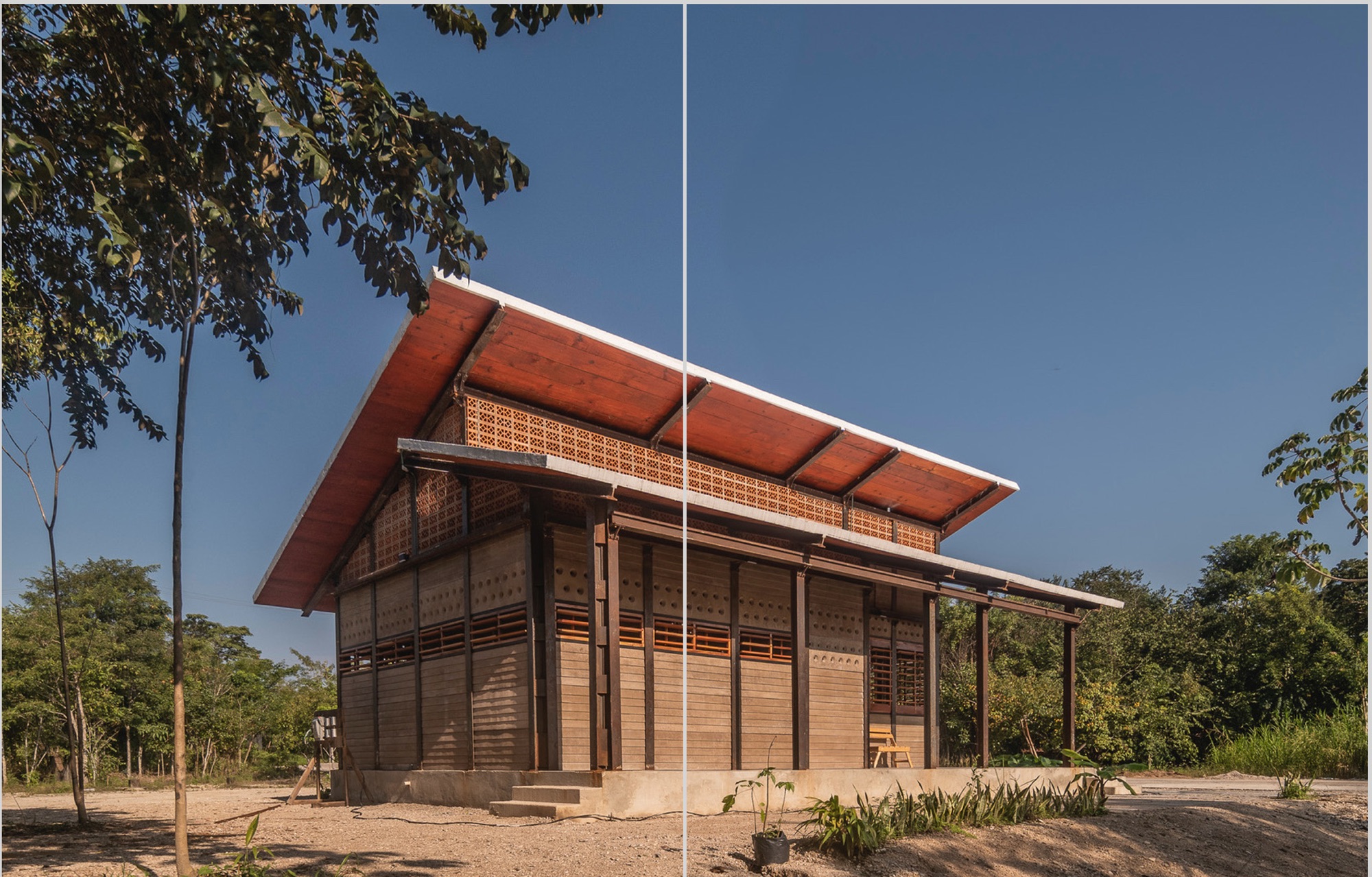
The Maya Train. This was the most ambitious infrastructure project of the federal government that ruled Mexico from 2018 to 2024. The project covers a rail route of 1,554 km-long (966 mi) in the Yucatán Peninsula.
In 2022, the School of Architecture at UNAM had the responsibility to propose a housing prototype for families who were previously settled on the right-of-way of the train through land invasions. This was an official agreement with the National Secretary of Tourism.
The families had to be relocated. Thus, the housing projects looked for the mitigation of the displacements, and the improvement of the precarious conditions of their homes and livelihoods.
At the Sustainable Infrastructures Initiative we offered a consulting service regarding the sustainable strategies and solutions in three scales: the architectural, the semi-rural, and the urban. We were able to influence the re-configuration of the kitchen, toilets and windows by exploring the WATER-FOOD-VENTILATION nexus as a design approach. Below, I explain in a text the guiding principles of the consulting services from the Sustainable Infrastructures Initiative:


By Dr. Ernesto Valero Thomas
2022
Rainfall, wetlands, firewood, wells, fruit trees, vegetable gardens, and animals. These are variables to consider in the design of homes and their public spaces in the municipalities of Tabasco and Campeche, in the South-East of Mexico.
Incorporating the WATER-FOOD-VENTILATION nexus into the architectural design of homes has the potential to reduce energy and natural resource consumption in the region. The heat and temperature generated by stoves in closed kitchens is an aspect to be addressed in the design of food preparation areas. In this region of the country, the use of gas and electricity in the kitchens of each home requires efficient ventilation.

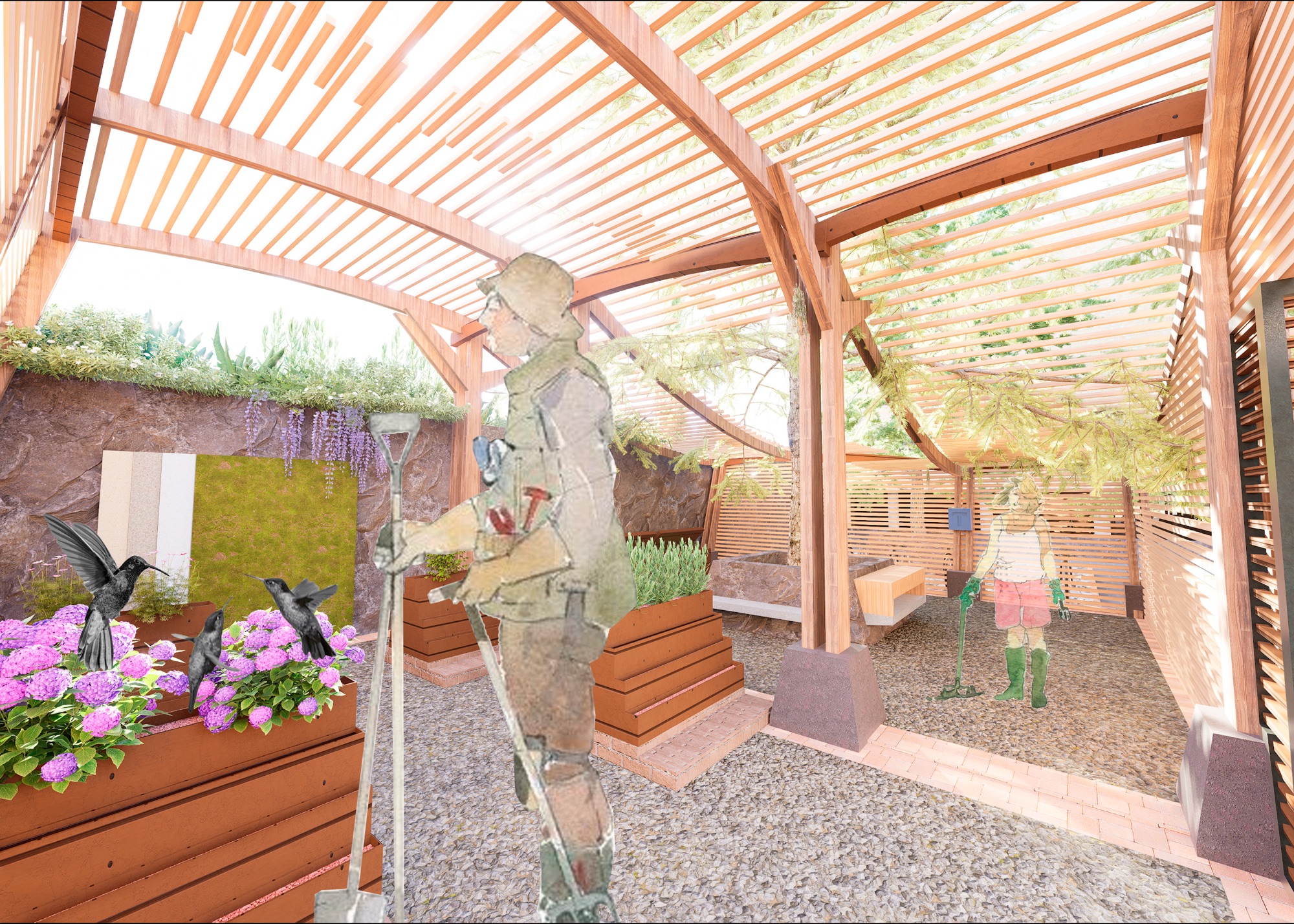
In addition, cooking food using outdoor wood-burning stoves is an activity that defines the layout of some patios or gardens. In the semi-rural context, the presence of small vegetable gardens, fruit trees, and animal farms is constant in the areas adjacent to homes.
Despite the practical benefits of drilling wells and pumping groundwater in this area, the constant rainfall allows for the primary supply of water for bathing, cooking, and washing through gravity and rainwater filtration. The use of wells and electric pumping should be a secondary approach.
How can we make more efficient the operation of gas tanks, the firewood management, the monitoring of the electricity supply, the movement of trash , and the treatment of water from rainwater harvesting and public water wells?

The exterior-exterior relationship in the kitchen, bathroom, and laundry areas will have to facilitate thermal comfort in the homes. Based on the aforementioned, the WATER-FOOD-VENTILATION nexus of each home will be treated as an integral unit that should work along with the other houses of each district.


Leave a Reply